
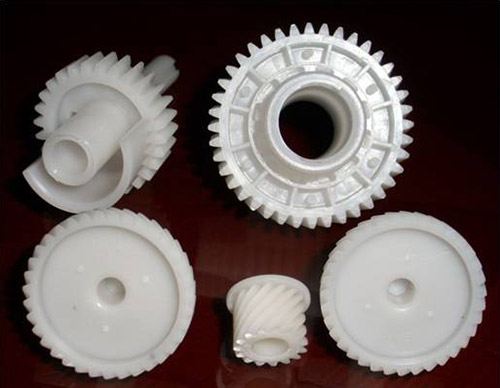
Exploring the Benefits of Custom Plastic Extrusion in Manufacturing
Custom plastic extrusion enables companies to create continuous profiles and shapes with design flexibility. At Clark Rubber and Plastic, we support a wide range of industries, and this includes appliances, military, and defense. Here are some benefits of custom plastic extrusion in manufacturing:
Custom Plastic Extrusion
Plastic extrusion involves melting raw plastic material and forming it into a shaped die. This process supports a variety of cross-sectional shapes and molds, and it ranges from simple tubes to highly complex profiles. This allows manufacturers to choose from numerous materials that influence properties like hardness, flexibility, texture, and color.
The extrusion technology and high-tech facilities can perform co-extrusion and tri-extrusion, combining different materials and colors into single profiles. Extruded parts are able to include solid cores, tubing, or sleeves. This helps meet rigorous tolerance and quality specifications, which involve in-line processing and quality systems.
This process is repeatable, and once a die design is finalized, the same profile can be produced consistently. The repeatability and scalability make custom extrusion ideal for components used in complex assemblies or demanding applications. At Clark and Rubber Plastic, our team creates parts for several industries, such as automotive and aerospace.
Precision and Material Versatility
Some benefits of custom extrusion include the material versatility. Extrusion allows manufacturers to engineer profiles with tight dimensional tolerances, which provides consistent geometric lengths. This level of control minimizes variation, reduces rework, and helps maintain quality from the first part produced to the last. The extrusion services support a broad spectrum of plastic materials, including HDPE, polycarbonate, ABS, and specialty compounds. This enables components to meet specific performance requirements such as impact resistance. Other benefits involve flexibility, chemical durability, or compliance with UL and IATF quality standards.
Material selection and extrusion design influence product behavior under operating conditions. This includes features such as resistance to abrasion, environmental stress cracking, and thermal variation. These characteristics support industries such as automotive or consumer goods, where parts must endure repeated use and exposure to different conditions.
Industry Applications
In the appliance sector, extruded plastic tubing, gaskets, and seals offer durability features. They also provide a precise fit in washing machines and other household devices. Automotive manufacturing uses extruded profiles that can replace metal components, and this reduces weight without losing strength. Plastic extrusions contribute to improved fuel efficiency and design flexibility for exterior trims and structural supports. A manufacturing process allows for customize extrusion and, when combined with precision machining and die cutting, makes it a valuable partner for automotive OEMs.
Custom profiles help enhance functionality, and in the military and defense sector, plastic parts must meet performance standards. Components like seals, liners, and protective tubing manufactured through extrusion are engineered to withstand extreme temperatures and mechanical stress. At Clark Rubber and Plastic, we supply components that meet strict dimensional and safety requirements.
Custom Plastic Extrusion
Custom plastic extrusion offers adaptable solutions across diverse industries, including military applications and household appliances. Whether for high-volume production runs or complex profile designs, the process supports exacting requirements and tight tolerances. At Clark Rubber and Plastic, we provide access to advanced technology, broad material expertise, and comprehensive support. Contact our team today to learn more about our services, and our team will provide information on different types of plastic extrusion processes.