
Enhancing Product Design Through Advanced Plastic Extrusion Techniques
Plastic extrusion involves a manufacturing process where raw plastic material is heated, melted, and pushed through a shaped die. Because the process is repeatable and scalable, it offers solutions for product designers who need consistent, geometry-specific parts across multiple industries. At Clark Rubber and Plastic, our team provides extrusion services to manufacturers across various industries, including the solar industry. Here is how advanced extrusion techniques enhance product design:
Plastic Extrusion Design Options
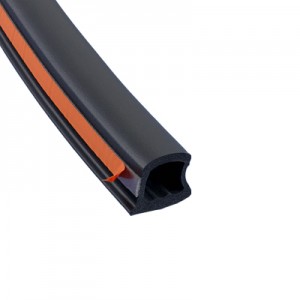
Extrusion materials can be selected to achieve specific properties, such as hardness, color, and mechanical performance. Co-extrusion and tri-extrusion expand these possibilities by combining two or three materials with different properties into a single extruded profile. A component may be rigid in one area and flexible in another. Because these combinations are created in a single die pass, the extrusion achieves consistent density and structural integrity. At Clark Rubber and Plastic, our product designers use extrusion techniques to create complex geometries in a single component rather than assembling multiple separate parts.
Material Selection and Part Performance
The extrusion materials determine how a component performs under real-world conditions. Extruded parts can be fabricated from a wide range of certified materials, including RPVC, polycarbonate, Santoprene, and UL-approved materials. Each material has different characteristics, such as resistance to moisture and chemicals. Other materials, such as polycarbonate, provide high impact strength; TPU offers both flexibility and abrasion resistance.
For applications that must meet military-grade standards, selecting certified materials is key to meeting specific requirements. Dual-durometer extrusions, where two materials with different hardness levels are co-extruded, help when a single part must perform two mechanical functions simultaneously. At Clark Rubber and Plastic, our team provides extrusion services for military-grade components used in vessels, tanks, and automobiles.
Applications Across Industries
Plastic extrusion produces components used across several industries, including automotive applications. Extruded plastic and rubber profiles are used for air and fuel system tubing, seals, gaskets, and trim components. Several metal parts in a vehicle can be replaced with lighter plastic equivalents without compromising safety or reliability.
In appliance manufacturing, extruded components appear in applications such as washing machine hoses and sealing systems. These parts include vibration control elements, grommets, and tubing. Such components must withstand extreme temperatures and constant use.
Consumer products, including electronics and outdoor goods, rely on extruded valve seals and other sealing components. These parts are often small, but they determine whether the end product functions reliably. Because the same extrusion platform is able to serve all three industries, manufacturers working across multiple markets can consolidate production with a single supplier.
Use Extrusion Processes Today
Plastic extrusion supports precise, repeatable production of complex profiles across a broad range of materials. This includes different hardness levels and geometries. Techniques like co-extrusion and tri-extrusion give product designers material flexibility within a single part. Certified quality systems help verify that finished components meet dimensional and safety standards. At Clark Rubber and Plastic, our team combines the process capability, material range, in-house tooling, and quality certification to determine whether a design intent translates accurately into a production component. Contact us today to learn more about our plastic extrusion processes.