
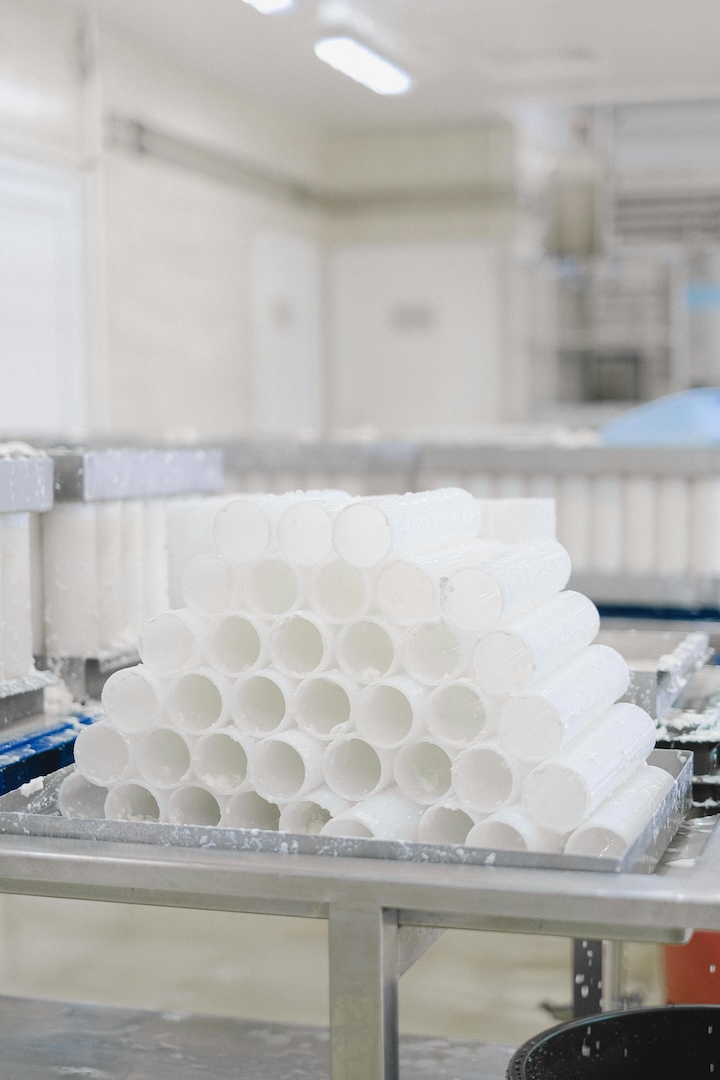
Understanding the Plastic Extrusion Process and Its Industrial Applications
Plastic extrusion works with materials such as PVC, polypropylene, and polyethylene. Clark Rubber and Plastic is a rubber and plastic manufacturing company that utilizes extrusion techniques to create plastic films, sheets, and other products. Here is more information about the extrusion process and its industrial applications:
Melting and Die Shaping
To begin the plastic extrusion process, plastic pellets are fed into a heating chamber. Manufacturers can add customized colorants with the pellets, which allows for color uniformity for the products. We are able to use multiple colors in a project if needed.
Plastic pellets are melted down in the chamber, and a filter screen removes impurities. The material is then pushed through a metal die, which shapes the plastic with precise blades. Clark Rubber and Plastic offers precision die cutting and customized die molds to create specific shapes for your packaging, specialty parts, casing, and seals.
Extrusion Techniques
Companies utilize a variety of extrusion techniques to create different products. If your product requires multiple properties, such as a rigid base and a flexible edge, manufacturers can combine multiple polymers during the extrusion process. Companies such as Clark Rubber and Plastic offer co-extrusion and tri-extrusion options, allowing them to extrude two to three polymers simultaneously. Adding two polymers in a cross-section allows the manufacturers to create layers, and the machines can be adjusted to allow different thicknesses and sizes. Tri-extrusion utilizes three extruders and materials.
Co-extrusion and tri-extrusion help save time and enhance properties such as strength, sturdiness, surface performance, and flexibility. Increased durability is beneficial for parts for military vehicles, as they will be used in extreme conditions.
Other extrusion techniques include tubing, blow film, sheet, and over-jacketing extrusion. Tubing extrusion creates medical and plumbing tubes by pushing internal pressure through the plastic, creating a hollow core. Blow film extrusion uses a circular die to create thin films for shopping bags, and sheet extrusion forms a flat, continuous sheet that can be put through cooling rolls to create different thicknesses. Sheet extrusion creates packaging materials and signs. Over-jacketing is used to protect cables and wiring by adding a layer of plastic over the product.
Cooling and Cutting
Cooling the product after it is shaped finalizes the form of the product. A belt pulls the plastic through a trough with a cool water bath. To maintain the shape of a plastic pipe, a designer can add a vacuum to the bath. A sizing belt then moves the plastic to a blade that cuts the plastic to form individual products.
Industrial Areas
Extrusion is able to create high-performing products used in various sectors. Manufacturers such as Clark Rubber and Plastic work with industries such as the consumer, appliance, and solar sectors. Plastic covers for food and cosmetics in the consumer industry prevent airborne contamination, and cable insulation protects wiring for fridges. Extruded clamps for solar panels are able to resist temperature changes.
Learn More About Plastic Extrusion
We can include finishes and additives to add fire-retardants and UV stabilizers to your product. To cut, drill, or coat your profile, we offer CNC turning and milling, and other secondary processes. Clark Rubber and Plastic is able to work with you for both high- and low-volume projects. We utilize dual-durometer, military-approved plastic materials. To begin a plastic extrusion project, we invite you to request a quote today.